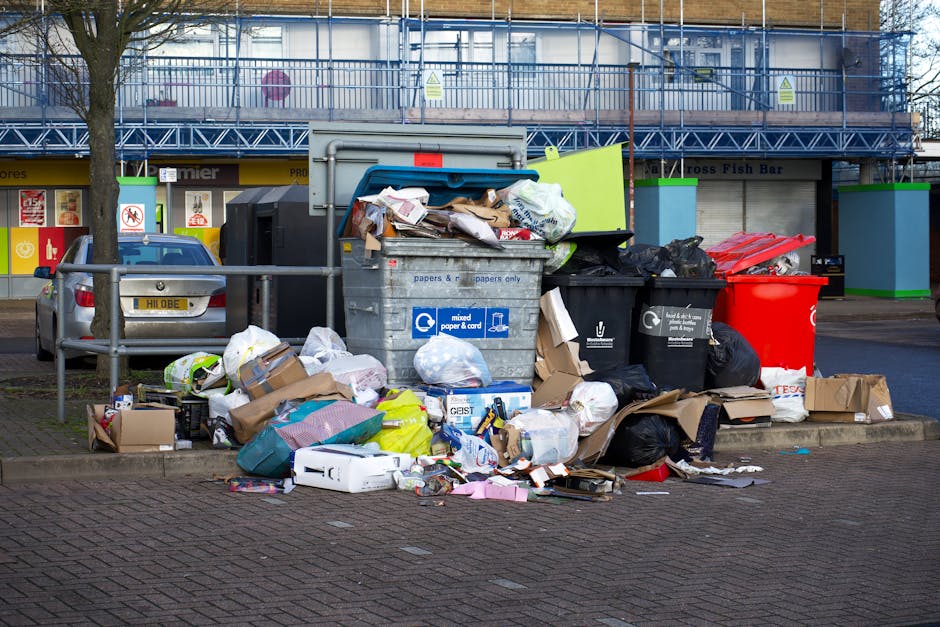
Lewisham rubbish clearance real cost guide: what you should actually expect to pay
If you are trying to work out the Lewisham rubbish clearance real cost guide, you are probably doing the same thing most people do first: trying to separate the real price from the vague "from" price. Fair enough. Rubbish has a funny habit of looking simple right up until you start moving it, bagging it, loading it, and realising there's a lot more of it than you thought.
This guide breaks down what affects rubbish clearance costs in Lewisham, how local services are usually priced, when a skip is better than a man and van clearance, and where hidden extras can creep in. It is written to help you make a sensible, confident decision, not just a rushed one. You will also find a practical checklist, a comparison table, and a few real-world examples that mirror the sort of jobs people in South East London face every week.
Table of Contents
- Why Lewisham rubbish clearance real cost guide matters
- How Lewisham rubbish clearance real cost guide works
- Key benefits and practical advantages
- Who this is for and when it makes sense
- Step-by-step guidance
- Expert tips for better results
- Common mistakes to avoid
- Tools, resources and recommendations
- Law, compliance, standards, or best practice
- Options, methods, or comparison table
- Case study or real-world example
- Practical checklist
- Conclusion
- Frequently asked questions
Why Lewisham rubbish clearance real cost guide Matters
Rubbish clearance costs can swing more than people expect. A small pile of mixed household waste is one thing; a first-floor flat clearance after a long declutter is another. In Lewisham, that difference matters because access, parking, loading time, permit needs, and waste type can all shape the final bill.
If you only compare headline prices, you can end up with a quote that looks cheap but turns expensive once labour, disposal, congestion, difficult access, or extra weight comes into play. That is exactly why a real cost guide matters. It helps you judge the price in context, not in isolation.
There is also a practical side to it. If you are clearing a home before a move, a garage after years of build-up, or a renovation load from a kitchen rip-out, timing and cost both affect the whole project. Choosing the wrong method can mean extra days of mess in the driveway. And nobody wants that. Especially not on a drizzly Lewisham afternoon when the bins are already full and the pavement is narrow.
For readers who need a broader look at waste solutions beyond one-off clearance, it can help to review skip hire options and the company's pricing and quotes page alongside this guide.
How Lewisham rubbish clearance real cost guide Works
At its simplest, rubbish clearance pricing is built from a few moving parts: the volume of waste, the type of waste, labour involved, transport, and disposal charges. Some services price by load size, others by weight, and some use a mixed model based on time plus disposal category. That is normal.
In a typical Lewisham clearance, a provider will usually ask what you are getting rid of, where it is located, whether the waste is bagged or loose, and how easy it is to remove. A ground-floor room with clear access costs less to clear than a loft full of broken furniture with a tight staircase and no parking nearby. Obvious, really, but easy to miss when you are just trying to get the job done.
Some clearances are better suited to a dedicated rubbish removal team, while others are more economical with a skip. If the waste is being loaded quickly by a team on site, you are effectively paying for speed and convenience. If you use a skip, you are paying for capacity and flexibility over a hire period. The trick is knowing which side of that trade-off suits your job.
For mixed loads, it is also worth checking what can legally and practically go into the chosen container. The guide to what can go in a skip is a useful companion if you are deciding between clearance and skip hire.
What usually sits inside the price
- Labour to lift, carry, and load the waste
- Transport to an authorised waste facility
- Disposal or processing fees
- Sorting and recycling work
- Any special handling for bulky items
- Parking, access, or waiting time if applicable
What can push the price up
- Heavy materials like soil, rubble, tiles, or plasterboard
- Furniture that is awkward to move
- Multiple floors or difficult access
- Restricted parking or permit requirements
- Hazardous or specialist waste
- Urgent same-day bookings
Key Benefits and Practical Advantages
The best rubbish clearance service is not always the cheapest one. It is the one that solves the problem cleanly, safely, and without surprise costs. That sounds obvious, but honestly, a lot of people only realise it after a bad experience.
Here are the main practical benefits of using a professional clearance service in Lewisham:
- Less physical effort: You do not have to move heavy bags, sofas, or awkward mixed waste yourself.
- Faster turnaround: A good team can clear what might take you a whole weekend in a few hours.
- Safer handling: Heavy lifting, sharp debris, and bulky items are managed properly.
- Better disposal route: Waste is sorted and taken to the right place rather than dumped or mixed badly.
- More predictable outcome: You know when the job starts, how long it should take, and what is included.
There is also a convenience factor people underestimate. If you are juggling work, school runs, tenants, or builders in and out of the house, a one-off clearance can remove a lot of stress. One client-style example: an end-of-tenancy clear-out with broken shelving, a mattress, and a pile of old bags can go from "I'll do it this weekend" to "thank goodness that's gone" very quickly once the right service arrives.
For bulky household items, you may also want to compare clearance with dedicated disposal services such as mattress and sofa disposal or fridge and appliance removal if your load is specific rather than mixed.
Who This Is For and When It Makes Sense
This guide is useful if you are a homeowner, landlord, tenant, tradesperson, or business owner trying to work out the real cost of getting rubbish removed in Lewisham. The job may be small or surprisingly large. Either way, the money question usually comes down to the same thing: what is the most practical way to clear it without overpaying?
It tends to make sense when you have any of the following:
- a house declutter or probate-style clearance
- garage, loft, or shed waste
- garden cuttings and outdoor debris
- DIY waste after a home update
- builders' waste from light renovation work
- office clear-out items like desks, chairs, and paperwork
- mixed waste that is too awkward for normal bins
If the job is commercial or recurring, you may also want to explore commercial skip hire or office clearance for a more structured arrangement. For construction-heavy jobs, the needs are different again, and builders waste removal or construction waste disposal may be more appropriate.
Truth be told, the moment a pile starts looking like a project rather than a tidy-up, it is worth pausing and pricing the job properly.
Step-by-Step Guidance
If you want a realistic price rather than a rough guess, follow a proper process. It does not need to be complicated.
- List the waste type. Separate household rubbish, furniture, garden waste, DIY debris, and anything unusual.
- Estimate volume. Think in bags, cubic yards, or roomfuls. A photo helps more than most people expect.
- Check access. Note stairs, narrow hallways, parking distance, and whether a vehicle can stop nearby.
- Decide on timing. Same-day jobs can cost more, but they may save you time and hassle.
- Ask what is included. Labour, loading, disposal, VAT, and recycling handling should all be clear.
- Ask about restricted items. Batteries, paint, chemicals, gas bottles, and similar waste need special treatment.
- Compare service types. A full clearance, a skip, or a wait-and-load option may each suit different jobs.
- Book only when the numbers make sense. If a quote is vague, ask for clarification before agreeing.
A small but useful tip: take a few photos in daylight. Morning light near the back door or under the loft hatch often shows the amount of waste more honestly than your memory does. We have all underestimated a pile before. It happens.
If you need a more flexible loading setup, a wait and load skip hire arrangement can suit streets where parking is awkward or permits are difficult.
Expert Tips for Better Results
A few practical habits can lower the final cost without cutting corners.
- Sort waste before quoting: Mixed waste often costs more than separated waste because it takes longer to process.
- Break down furniture where safe: Flat-pack items and dismantled shelving are easier and quicker to remove.
- Keep hazardous items apart: Do not hide paint, solvents, or batteries in general rubbish.
- Bundle similar waste together: Garden waste with garden waste, wood with wood, cardboard with cardboard. Simpler is better.
- Check whether a permit may be needed: If a skip is placed on a public road, that can change the cost and timing.
- Be honest about weight: A few bags of rubble can cost a lot more than a few bags of leaves. Big difference.
Another good practice is to ask for a clear breakdown rather than a single number. A quote that separates labour, disposal, and extra charges is easier to trust. Not glamorous, but helpful.
For difficult access jobs, consider whether an grab hire service or man and van approach is more efficient than a standard skip. Sometimes the smarter answer is the one that avoids extra moving altogether.
Common Mistakes to Avoid
Most pricing mistakes come from assumptions. And assumptions are expensive, let's face it.
- Choosing on headline price alone: A cheap quote may exclude labour, disposal, or waiting time.
- Underestimating volume: The "it's only a small pile" problem is famously unreliable.
- Ignoring access issues: Long carries, upstairs rooms, and parking restrictions all affect price.
- Mixing waste types without checking: Some items require different handling or separate disposal.
- Leaving it too late: Urgent bookings can narrow your options and increase the final cost.
- Forgetting permit requirements: This is a classic hidden cost on road-side skips.
One easy mistake to make is assuming everything that "looks like rubbish" is treated the same way. It is not. A bag of clothes, a broken wardrobe, and a load of plasterboard may all end up in different streams. That is why trustworthy providers should be clear about sorting and disposal, and why pages such as recycling and sustainability can be useful when you want to understand the bigger picture.
Tools, Resources and Recommendations
You do not need a toolkit in the literal sense, but a few simple resources help you get a better result.
- Phone camera: Take wide shots and a close-up or two. This helps with accurate quoting.
- Measuring tape: Handy for estimating the size of bulky items or storage areas.
- Basic tally list: Count bags, items, and piles so you do not forget half the job.
- Notes on access: Stair numbers, lift availability, parking distance, and time restrictions all matter.
- Questions to ask a provider: What is included? Are there extra charges? How is waste processed? What cannot be taken?
If you are unsure about pricing structure, compare the service against the company's skip sizes and prices page. Even if you do not book a skip, it gives a useful reference point for volume-based pricing. And if you want a firm starting point, you can always use book online once you know roughly what you need.
For some households, a simple domestic skip hire option may be more cost-effective than a full clearance. For others, especially where someone wants the waste gone in one visit, direct removal wins on convenience.
Law, Compliance, Standards, or Best Practice
Waste disposal in the UK is not something to guess at. The basics are straightforward: waste should go to an appropriate, authorised facility, and the person arranging removal should be confident that it is being handled responsibly. You do not need to become an expert in waste law, but you should expect professional standards.
Best practice usually includes:
- clear identification of restricted or hazardous waste
- safe loading and lifting methods
- appropriate transport and disposal routes
- transparent pricing and terms
- responsible recycling wherever practical
For specialist or sensitive items, use the relevant service type rather than bundling everything together. Confidential paperwork, for example, should be treated differently from ordinary household waste. Likewise, items such as fridges, electrical appliances, chemicals, and some renovation debris need extra care. If you have those kinds of materials, look at confidential shredding, fridge and appliance removal, or hazardous waste disposal where relevant.
Companies that speak clearly about their process, insurance, safety, and payment handling are usually easier to work with. If you want to understand how a provider approaches trust and process, pages like insurance and safety, payment and security, and health and safety policy are worth a look. A little dull, yes. Still important.
Options, Methods, or Comparison Table
The real cost of rubbish clearance often depends on choosing the right method, not just the cheapest provider. Here is a simple comparison.
| Method | Best for | Typical advantages | Potential drawbacks |
|---|---|---|---|
| Rubbish removal / man and van | Mixed household waste, bulky items, quick clear-outs | No loading yourself, fast turnaround, convenient for access-limited homes | Can cost more for heavier loads or repeated trips |
| Skip hire | DIY waste, renovation debris, longer jobs | Flexible loading, good for ongoing clear-outs, easy if you want time on your side | May need a permit, space on site, and careful waste sorting |
| Wait and load | Busy streets, restricted parking, urgent jobs | Quick, avoids leaving a skip behind, useful where access is awkward | Requires you to be organised and ready to load promptly |
| Grab hire | Heavy or loose waste such as soil, rubble, or mixed site waste | Excellent for volume and bulk, often efficient on larger clearances | Needs physical access for the vehicle and enough space to operate |
For builders and heavier jobs, it can also be useful to compare builders skip hire with grab lorry hire. One is not automatically better. It depends on the waste, the site, and how quickly the work needs to move.
Case Study or Real-World Example
Here is a realistic Lewisham-style scenario. A two-bedroom flat needs clearing after a long-overdue declutter: an old sofa, a mattress, several bin bags, broken shelving, a small desk, and a few odds and ends from the hallway cupboard that have somehow multiplied over the years. The property is on an upper floor, the stairwell is narrow, and parking outside is tight in the late afternoon.
If the owner tried to do it alone, the job would likely take a full weekend, plus a second trip to dispose of the bulky items properly. A skip might work, but if roadside placement is awkward, a permit could add cost and delay. In this kind of job, a clearance team or man-and-van style service often makes more sense because the labour is built into the process and the waste disappears in one go.
Now compare that with a kitchen refit in a house with a driveway. Old cabinets, offcuts, packaging, and some plaster debris stack up fast. In that case, a skip may be the cleaner option because the waste is likely to build over several days and the owner wants flexible loading. Different job, different answer. That is the bit people miss when they ask for a single "usual price". There really isn't one.
If the waste is tied to a renovation or site project, nearby services such as construction waste clearance or site clearance may be more fitting than a basic rubbish uplift.
Practical Checklist
Use this before you book anything.
- Have I identified all waste types clearly?
- Have I taken photos from a few angles?
- Do I know whether the items are bagged, loose, or bulky?
- Have I checked access, stairs, and parking?
- Do I know if a permit may be needed?
- Have I separated hazardous or specialist items?
- Have I asked what is included in the price?
- Have I compared clearance against skip hire?
- Have I checked timing and any same-day uplift charges?
- Do I understand the payment terms before confirming?
If you can tick most of those off, you are already ahead of the game. Not glamorous, but it saves money and hassle. A good quote should feel straightforward after this stage, not like a puzzle.
Get a free quote today and see how much you can save.
Conclusion
The real cost of rubbish clearance in Lewisham depends on what you are moving, how much there is, and how easy it is to remove. That is the honest answer. Anyone promising a universal price without asking questions is usually leaving something out.
If you remember only three things, make them these: match the service to the waste type, check what is included in the quote, and be realistic about access and volume. Do that, and you will make a much better decision. Whether you choose a clearance team, a skip, or a mixed approach, the goal is the same: get the space back without paying for avoidable surprises.
And once it is all gone, the room always feels bigger than you thought it would. Funny how that works.
Frequently Asked Questions
How much does rubbish clearance usually cost in Lewisham?
The cost varies depending on volume, waste type, access, and whether labour is included. A small household clearance will usually cost less than a bulky or heavy-load job, especially if stairs or parking make the work slower.
Is rubbish clearance cheaper than skip hire?
Not always. Clearance can be better for bulky items, awkward access, or one-off mixed waste, while skip hire may work out better for ongoing DIY or renovation waste. The cheaper option depends on the job, not just the service label.
What makes a Lewisham rubbish clearance quote more expensive?
Heavy waste, multiple floors, difficult parking, same-day booking, and specialist items all tend to increase the price. Mixed loads can also cost more if the waste needs extra sorting or separate disposal.
Do I need a permit for rubbish clearance?
Usually not for a direct rubbish removal service. Permits are more commonly relevant if you are placing a skip on a public road. If that is your plan, check skip hire permits or skip permits before booking.
Can I put everything in one load?
Not necessarily. Some items need special handling, and hazardous waste should never be mixed in with general rubbish. It is better to separate items like batteries, chemicals, paint, fridges, and confidential documents before collection.
What is the best option for a loft clearance?
If the loft contains mixed household waste, broken furniture, and awkward access, a clearance service is often the easiest choice. For more structured jobs, garage and loft clearance can be a useful fit.
Is same-day rubbish clearance available in Lewisham?
Sometimes, yes. It depends on workload, access, and the type of waste. Same-day services are convenient, but they can cost more and may require a quick decision on the spot.
What happens to the rubbish after collection?
It is normally taken to an authorised waste facility for sorting, recycling, and disposal. Responsible operators will separate recyclable material where practical and manage specialist waste appropriately.
Can builders waste be cleared with household rubbish?
It can be, but mixed loads may affect price and disposal routes. For larger renovation jobs, builders waste removal or builders skip hire may be more suitable than a standard household collection.
How do I avoid surprise charges?
Ask for a written or clearly itemised quote, share photos, describe access honestly, and confirm whether labour, VAT, disposal, and special waste charges are included. Clarity up front is the easiest way to avoid awkward surprises later.
What if I only have a few large items to remove?
A targeted service may be better than a full clearance. Items like sofas, mattresses, appliances, or a few office pieces can often be handled more efficiently by the relevant specialist service.
Where can I learn more before booking?
Start with the company's about us page for background, then review service and pricing pages such as rubbish removal and pricing and quotes. If you are ready, contact us is the next step.